
 CA
CATABLE OF CONTENTS
Elevate Your Interiors: Integrating Stair Railing with Cable for a Modern Home
In modern home design, staircases are no longer treated as purely functional structures. They play an important role in how open, bright, and connected a home feels. Among all staircase elements, stair railing has the greatest visual impact—and the right choice can dramatically change the way a space is experienced.

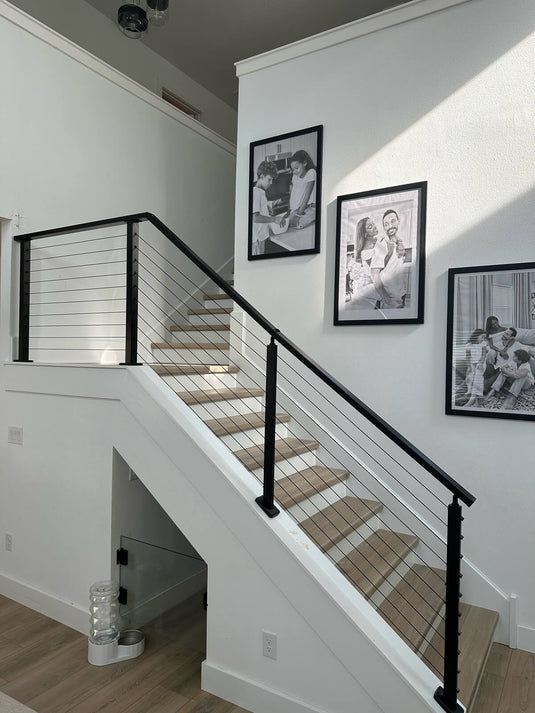
Photos Provided By John Hein
Cable stair railing has become a popular solution for homeowners who want a cleaner, more open interior without sacrificing safety. By reducing visual clutter and preserving sightlines, it allows staircases to feel lighter and more intentional within the overall design.
Why Stair Railing Influences the Entire Space
A stair railing does more than guide movement between floors. It shapes how light travels through a room and how visually connected different areas feel.
Traditional stair railing systems often rely on thick balusters or decorative metalwork. While functional, these designs can interrupt sightlines and make open layouts feel more closed off. Cable stair railing approaches the problem differently by minimizing visual obstruction, allowing the staircase to blend naturally into the surrounding space.

What Is a Cable Stair Railing?
A cable stair railing is a type of stair railing that uses horizontal stainless steel cables in place of traditional vertical spindles or balusters.
The cables are anchored between structural posts and paired with a solid handrail at the top. When properly tensioned, the system provides strength and stability while maintaining an open, streamlined appearance. Because the cables are thin and evenly spaced, they visually recede, making the stair railing feel almost transparent from a distance.
This balance between safety and openness is what defines cable stair railing as a modern design solution.
Why Homeowners Choose Cable Stair Railing
One of the primary reasons homeowners choose cable stair railing is improved visibility.

Horizontal cables allow natural light to move freely through the staircase, helping interiors feel brighter and more spacious—especially in homes with open floor plans or large windows.
Cable stair railing also aligns well with modern and transitional interior styles. Its clean lines and minimal detailing create a timeless look that feels intentional rather than decorative. Instead of drawing attention to the railing itself, the design supports the architecture of the home as a whole.
Durability is another factor. Stainless steel cables are designed to resist corrosion and wear, making cable stair railing a long-term solution that requires minimal upkeep.
How Material Choices Shape the Look of Your Stair
Cable stair railing systems are highly adaptable, allowing homeowners to tailor the look to their interior style.
Metal cable stair railing create a clean, architectural appearance that complements contemporary spaces. Finishes like stainless steel or matte black emphasize straight lines and reinforce a modern aesthetic.

Wood cable stair railing introduce warmth and contrast. Paired with horizontal cables, wood helps soften the overall look while maintaining a modern edge. This combination works particularly well in homes that balance contemporary design with traditional materials.

Photos Provided By Homeowner
The handrail completes the system. A metal handrail enhances a streamlined look, while a wood handrail adds comfort and visual grounding. In many interiors, wood handrails provide a familiar touchpoint that balances the technical appearance of the cables below.
Is Horizontal Cable Stair Railing Safe for Families?
Safety is a common concern when homeowners consider cable stair railing. When installed correctly, horizontal cable stair railing meets building code requirements and provides reliable protection.
Codes typically require that a 4-inch sphere cannot pass through any opening in the stair railing. To meet this standard, horizontal cables are spaced closely—often between 3 and 3.5 inches—and tensioned to limit deflection.
Proper tension is essential. When cables are installed and tightened correctly, they remain firm and stable, maintaining safety without compromising the open design that defines cable stair railing.
Installation Considerations for Cable Stair Railing
Installing cable stair railing requires careful planning and precision. Structural posts must be securely anchored to handle cable tension, and cable runs must be drilled and aligned accurately. Watch the Tutorial Video: Drilling Posts for cable stair railing▾
Because tension plays a critical role in both safety and appearance, many homeowners choose professional installation. Experienced installers understand local code requirements and ensure the stair railing is straight, secure, and evenly tensioned. This is especially important for longer stair runs or multi-level installations.
Maintenance and Long-Term Performance
One of the advantages of cable stair railing is its low maintenance profile. Stainless steel cables resist rust and do not require painting or sealing.
Routine care usually involves simple cleaning to remove dust or fingerprints. Over time, cables may experience slight relaxation due to natural settling, but most systems are designed to allow for easy re-tensioning when needed. In most homes, this adjustment is infrequent.
A Modern Stair Railing That Enhances How Your Home Feels
Cable stair railing is not simply a design trend—it reflects a shift toward lighter, more intentional interior design. Opening sightlines and reducing visual barriers helps homes feel more connected and spacious without sacrificing safety. For homeowners seeking a modern stair railing solution that balances function, durability, and visual clarity, horizontal cable stair railing continues to be a practical and enduring choice.
Not sure where to start? Just fill out the quick form below
Our experts provide 1-on-1 guidance and can deliver a free personalized quote in as little as 48 hours.
Start My Project →