
 CA
CATABLE OF CONTENTS
Navigating Local Building Codes for Deck Cable Railing in the US
Cable railing systems give decks a modern, clean look and provide safety without blocking the view. But, putting in a cable railing is more than just picking a style that you like. You have to meet a lot of building codes so that it's not only safe but legal as well. The codes mainly come from the International Residential Code (IRC) and the International Building Code (IBC). They're meant to stop falls and injuries. This guide will take you through the main building codes for cable railing systems in the US. It will help you understand the regulations for a safe and accurate deck project.

📷 Real Feedback from David Peterson
The Foundation of Deck Railing Codes: IRC and IBC
In the United States, the International Residential Code (IRC) and International Building Code (IBC) developed by the International Code Council (ICC) serve as widely used model building codes for residential and other buildings, respectively. However, they only become legally enforceable when adopted and sometimes modified by state or local governments. Therefore it’s essential to check with your local building department for the specific codes and amendments that apply in your area.
Key Code Requirements for Cable Railing Systems
When you install a cable railing system, you have to meet several important code rules. These rules cover everything from the height of the railing to the space between the cables.
-
Guardrail Height Requirements
A guardrail refers to the railing along the open edges of a deck. Under the IRC, guardrails are required for decks more than 30 inches above the adjacent grade, measured vertically from the deck surface. For residential applications, the IRC specifies a minimum guardrail height of 36 inches, measured from the deck floor to the top of the rail. Some jurisdictions, such as California, adopt more stringent requirements and mandate a 42-inch minimum height for residential decks. For commercial and multi-family buildings, the IBC generally requires guardrails to be at least 42 inches high. Because local amendments can vary, always verify the specific requirements with your local building department before planning your deck railing project.
-
The 4-Inch Sphere Rule
One of the most important safety requirements for cable railing systems is the 4-inch sphere rule. This rule requires that the spacing between cables be small enough that a 4-inch sphere cannot pass through. The intent is to prevent small children from slipping through the railing. To meet this requirement, proper cable tension is essential. When cables are tensioned correctly, they deflect less under pressure, helping maintain compliant spacing even when force is applied.
-
Load-Bearing Capacity
Deck railings must be strong enough to resist the force of someone leaning or falling against them. Under the IRC, guardrails are required to withstand a minimum concentrated load of 200 pounds applied at the top of the rail, representing typical forces from a person leaning or falling against it. This ensures the railing remains securely in place and can help prevent falls. To meet this requirement, posts and all connecting components must be properly anchored and designed to handle the required load, including the top rail, fasteners, and connections to the deck structure.
Post Spacing and Cable Tension
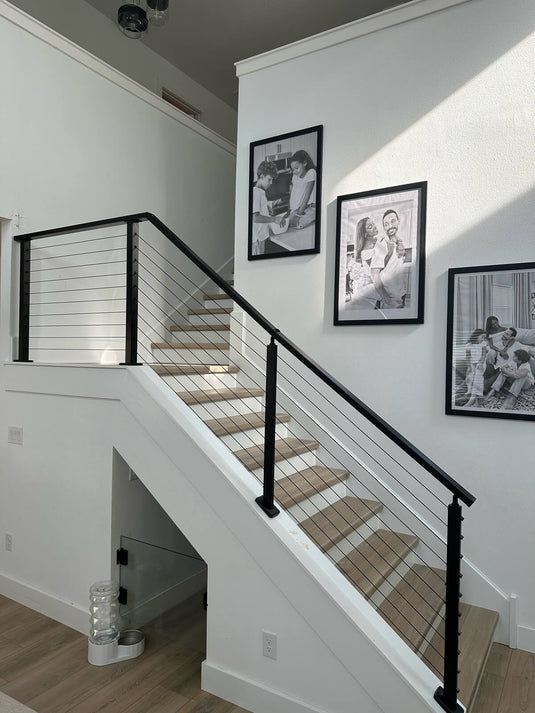
Proper post spacing plays a critical role in maintaining cable tension and overall railing stability. For most cable railing systems, primary posts should generally be spaced no more than 4 feet apart. Closer spacing helps reduce cable deflection and makes it easier to comply with the 4-inch sphere rule. Cable tension is equally important: cables should be tightened according to the manufacturer’s guidelines to ensure safety and code compliance, while avoiding over-tensioning that could place excessive stress on the posts.
Handrail Requirements for Stairs
Stairs connected to a deck have their own set of code requirements, especially regarding handrails.
-
Handrail Height
Under the IRC, stair handrails should be between 34 and 38 inches high, measured from the front edge of the stair treads. This height ensures a safe and comfortable grip for people of varying heights.
-
Graspability
A handrail must be comfortable to hold. This implies that it is a shape that one can easily hold onto. For circular handrails, the outside diameter must range between 1 ¼ and 2 inches. Non-circular handrails also have some size specifications for them to be securely held.
-
The 6-Inch Sphere Rule for Stairs
While the 4-inch sphere rule applies to the primary guardrail, stairs have an additional safety rule for the triangular opening formed by the tread, riser, and bottom rail of the guardrail. This gap must be small enough that a 6-inch sphere cannot pass through, preventing children from slipping into the opening.

The Importance of Checking Local Codes
While the IRC and IBC provide national model codes, local governments enforce their own building regulations. States, counties, and cities can adopt modifications to these codes. For example, California requires a 42-inch guardrail for residential decks, higher than the IRC’s 36-inch minimum. Before starting any deck project, it is essential to consult your local building department to understand the specific requirements in your area. This helps ensure your project is safe and avoids costly corrections later.
Conclusion
Installing a cable railing system can be a wonderful project that enhances the appearance and functionality of your deck. But it is a project that requires you to be diligent about attention to detail and to familiarize yourself completely with the building codes involved. By studying the important regulations of the IRC and IBC, and most importantly, by consulting with your local building authorities, you can ensure your new railing will be both safe and lovely.

📷 Real Feedback from David Peterson