
 CA
CATABLE OF CONTENTS
What Is the Best Finish for Metal Railings?
Metal railings are the backbone of a modern deck, providing safety and structure. However, without the right armor, even the strongest steel is vulnerable. A proper finish does far more than just enhance the beauty of your home—it serves as a critical shield, protecting your investment from the relentless assault of rain, UV rays, and salt air.
Without a quality finish, a sturdy railing can succumb to rust and corrosion within just a few years. But with options ranging from traditional paint to industrial-grade powder coating and specialized stainless steel treatments, how do you decide what's right for you?
In this guide, we strip away the technical jargon and compare the durability, maintenance, and aesthetics of the top finishes, helping you choose the perfect "armor" for your deck.
Why Your Railing Needs Armor (Not Just Color)
Before we compare the options, it is important to understand what a finish actually does. Whether installed on indoor floating stairs or an outdoor deck, metal railings face constant physical and environmental challenges.
Think of the finish as the skin of your railing. A high-quality finish delivers three non-negotiable benefits:
Oxidation Defense🛡️
It creates an impermeable barrier against moisture and chemicals, preventing the dreaded "red rust" that compromises structural integrity.
UV Resistance☀️
It acts like sunscreen for your railing, preventing color fading, chalking, and peeling under long-term sun exposure.
Aesthetic Definition⭐
Whether you prefer the sleek, modern matte black look or a classic glossy shine, the finish defines the personality of your space.
At a Glance: How the Top Finishes Stack Up
Not all finishes are created equal. To help you orient yourself quickly, here is a snapshot of how the three most popular options compare in terms of performance and maintenance.
| Feature | Paint | Powder Coating (Recommended)👍 | Stainless Steel / Anodized |
|---|---|---|---|
| Application | Brush or Spray | Electrostatic Spray & Heat Cure | Electrochemical / Natural |
| Durability | Moderate | High | Very High |
| Maintenance | Frequent touch-ups | Minimal cleaning | Minimal (occasional rinse) |
| Eco-Friendly | Low (VOCs) | Excellent (Zero VOCs) | Good |
| Lifespan | 5–7 Years | Up to 20 Years | 20–30+ Years |
| Best For | DIY budget | High-traffic & Weather resistance | Coastal / Luxury |
Now that you have the big picture, let’s dive deeper into the pros and cons of each contender.
The Contenders: A Deep Dive into Finish Options
1. Paint: The DIY Friendly (But High Maintenance) Option
Paint is the most traditional and accessible option on the market. It allows for unlimited color customization and can be applied by almost anyone with a brush or sprayer.
However, convenience comes at a cost. Paint forms a physical bond rather than a chemical one, creating a layer that is significantly thinner than other finishes.
- The Upside: Low initial cost and the ability to easily change colors whenever you want.
- The Downside: It is prone to chipping, peeling, and fading. In outdoor environments, you will likely need to scrape, prime, and repaint every 5 to 7 years to prevent rust from taking hold.
- Verdict: Good for small DIY repairs or indoor accents, but generally not recommended for long-term structural railing projects.
2. Powder Coating: The Modern Standard for Durability
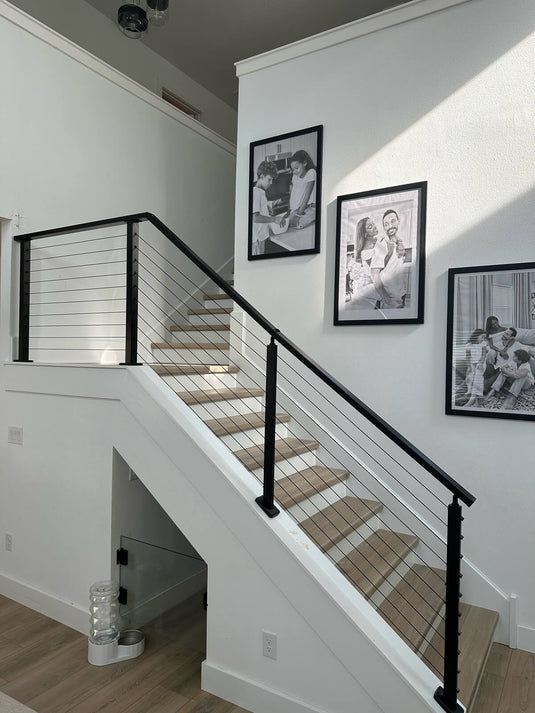
If you've seen a sleek, matte black cable railing system that looks flawless, it is likely powder coated. Unlike paint, this process involves applying a dry powder electrostatically, which is then cured under extreme heat to form a "skin" that fuses to the metal.
This creates a finish typically 2–4 mils thick—twice the thickness of standard paint.
- Why it wins🚩: It is extremely resistant to scratching, chipping, and UV damage. Plus, it's eco-friendly, containing zero VOCs (Volatile Organic Compounds).
🖼️ Explore finished projects ➨
3. Raw & Refined: Stainless Steel and Anodized Finishes
Sometimes, the best "finish" is the quality of the metal itself.
- Stainless Steel (Brushed or Mirror): High-grade materials, such as T304 and the marine-grade T316, don't rely on a coating that can chip off. Instead, their surface is treated (brushed or polished) to fight corrosion naturally. This is the gold standard for durability.
- Anodized Aluminum: This isn't a coating, but an electrochemical process that thickens the natural oxide layer of the aluminum. It creates a surface as hard as sapphire, making it nearly impossible to scratch or peel.
Choosing the Right Finish for Your Environment
The "best" finish isn't just about preference; it's about geography. Where you live should dictate what you buy.
Scenario A: General Outdoors (Sun, Rain, Snow)

For most residential decks, Powder Coating is the clear winner. It offers the best balance of cost, style, and protection. The popular Matte Black finish not only looks stunning but hides dust and water spots better than glossy alternatives.
Scenario B: Coastal & Saltwater Areas

If you live within 10 miles of the ocean, salt air is your enemy. It will eat through standard paint and lower-grade metals in months. Here, Marine-Grade Stainless Steel (T316) is non-negotiable. Alternatively, a specialized thick powder coat (like those used in Muzata’s premium lines) can offer substantial protection if maintained with regular freshwater rinsing.
The Verdict: Which Finish Wins?
Choosing the right finish is about balancing your environment with your aesthetic goals.
- Choose Paint if: You are on a strict budget, love DIY projects, and don't mind maintenance.
- Choose Powder Coating if: You want a modern, "set it and forget it" solution that looks great year-round.
- Choose Stainless Steel if: You live near the coast or want an industrial, ultra-durable look.
Choosing the perfect finish is just the beginning. At Muzata, we believe your railing project should be stress-free. You don't need to calculate parts or worry about compatibility alone. Let our experts do the work. Simply share your project details, and we'll provide a Free Custom Design & Quote—tailored specifically to your home's layout and environment.
Frequently Asked Questions (FAQs)
A1: Initially, yes. Powder coating can cost 20-30% more upfront. However, because paint requires labor-intensive scraping and repainting every few years, powder coating is far cheaper in the long run due to its longevity.
A2: Yes, dark colors naturally absorb heat. However, high-quality finishes dissipate heat better than cheap, thick paint. If heat is a major concern for sensitive hands, consider a Brushed Stainless Steel finish, which reflects sunlight and stays significantly cooler.
A3: Yes. While you cannot re-powder coat it on-site (as it requires an oven), you can use high-quality matching touch-up paint—often supplied by manufacturers like Muzata—to seal scratches and prevent rust from spreading.
A4: Keep it simple. Warm water and mild dish soap with a soft sponge are all you need. Avoid harsh chemicals, bleach, or steel wool, as these can damage the protective finish.