
 CA
CATABLE OF CONTENTS
Illuminating Your Path: Stair Lighting Options for Cable Railing
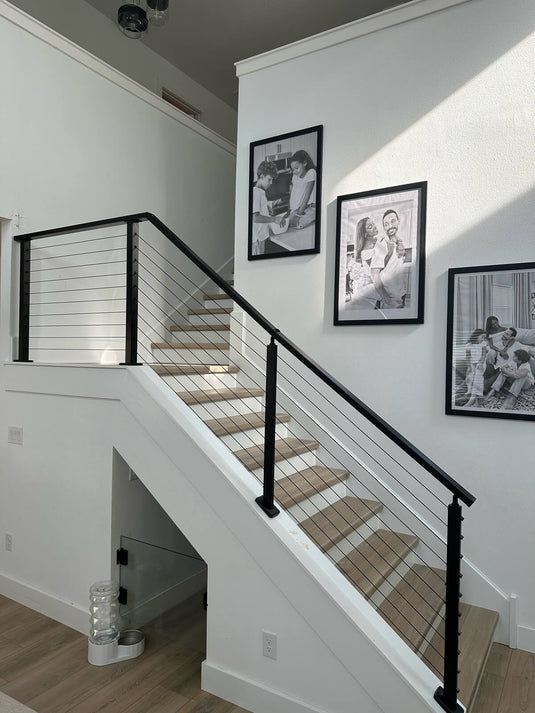
So, you’ve installed beautiful cable stair railing, and they look fantastic. The open, airy design is a huge style upgrade. But what happens when the sun goes down? Navigating stairs in the dark isn't just a hassle; it's a safety risk. The right lighting doesn't just make your staircase safer—it highlights its best features, turning a simple path into a stunning focal point. Let's walk through some of the best ways to light up your new staircase.

Option 1: Post Cap Lights
Post cap lights replace the standard caps on top of railing posts and cast a soft, ambient glow downward and outward. They are especially popular for wood cable railing systems on outdoor decks and stairs. Both low-voltage wired and solar/battery-powered versions exist, though the latter are much easier for retrofits.

How They Work and What to Expect
Available in low-voltage, solar, and battery-powered versions.
- Solar and battery models require no wiring, making them ideal for quick DIY upgrades.
- Low-voltage options must be connected to a transformer but offer the most consistent brightness and reliability.
These lights are best for perimeter illumination, helping define the edges of your stairs rather than lighting each individual tread.
The Pros and Cons
The biggest advantage is the simple installation, especially for solar- or battery-powered versions. The main downside is that because the light source is positioned higher, the posts can cast shadows onto the steps. These lights are better for general area illumination than for focused task lighting on each tread, so they’re often best paired with another light source.
Option 2: Side-Mounted Post Lights
Side-mounted post lights attach to the vertical faces of your railing posts and shine light directly down onto the stair treads. They’re an excellent choice when visibility and safety are the priority.

A Sleek and Functional Choice
These lights are typically use low-voltage LED lights that shine downward, making them ideal for staircases where illumination needs to be focused on the walking surface. Their compact design also makes them particularly well-suited for modern cable railing systems.
The Pros and Cons
Pros:
- One of the best options for tread visibility and safety.
- Low-profile and modern appearance that blends well with cable railing.
- Provides focused lighting exactly where it’s needed.
Cons:
- Low-voltage versions require drilling into the posts and running wires.
- Creates a distinct “scalloped” pattern on the steps, which some people may or may not prefer.
- Battery or clip-on alternatives exist but may be less durable or bright.
Option 3: Under-Rail Lighting
For a truly clean, high-end look, it’s hard to beat under-rail lighting. This method involves fitting a continuous strip of LED lighting into a channel on the underside of the handrail. The result is a seamless ribbon of light that washes down the entire length of the staircase.
Build Your LED-Ready Cable Railing
Our handrails are pre-cut with LED channels so you can add your own lighting later.
Start My Project →The Ultimate in Modern Lighting
This approach completely hides the light source, creating an elegant effect where the glow seems to appear from nowhere. It provides very even and consistent illumination across the steps and cables, beautifully highlighting the unique design of your cable railing stairs.
The Pros and Cons
Pros:
- Extremely clean and high-end look with fully concealed lighting.
- Produces even, consistent illumination down the entire staircase.
- Perfect for contemporary or minimalist designs.
Cons:
- If the handrail does not have a built-in channel, routing a groove adds labor. Therefore, it’s generally recommended to use pre-grooved handrails (such as Muzata HL12) for a simpler and cleaner installation.
- Requires wire routing and transformer placement.
Option 4: Step and Riser Lights
Instead of lighting the railing, these fixtures illuminate the stairs themselves. Lights can be installed in the treads or risers, offering the most direct visibility for your footing.

Direct, Dramatic, and Safe
This approach gives you the most direct lighting for your footing, making it another top-tier choice for safety. Lights installed in the risers, in particular, can create a beautiful "floating stairs" effect that looks incredibly dramatic and modern. It’s a look that pairs wonderfully with the open feel of a cable railing system.
The Pros and Cons
Pros:
- Outstanding tread visibility and safety performance.
- Riser lighting can create dramatic, architectural effects.
- Fixtures are usually very small and blend into the staircase design.
Cons:
- Recessed fixtures require drilling into treads or risers and running wires through the stair structure. This makes them the most invasive and labor-intensive option, especially for retrofits.
- Surface-mounted or clip-on versions reduce structural work but still require wiring unless battery-powered.
- Best installed during initial construction or major renovation to hide wires cleanly.
How to Choose the Right Lighting
Consider the following factors as you decide which option fits your staircase best:
1. Style Preference
- Soft ambient glow: Post cap lights
- Focused safety lighting: Side-mounted post lights or step/riser lights
- Clean, high-end modern look: Under-rail lighting
2. Power Source
- Low-voltage wired: Most reliable and consistent; requires a transformer and wiring
- Solar: Great for outdoor, sunny areas; limited brightness
- Battery-powered: Easiest retrofit but requires periodic battery replacement
3. Installation Difficulty
- Easiest: Solar or battery-powered post cap lights
- Moderate: Side-mounted lights or surface-mounted step lights
- Most complex: Under-rail lighting (if grooving required) and recessed step/riser lights
4. Budget
- Most affordable: Post cap lights (solar or battery)
- Mid-range: Side-mounted lights
- Highest investment: Under-rail lighting and recessed step/riser lights
Conclusion
Your cable railing is already a striking feature in your home. Adding the right lighting can enhance its beauty, highlight architectural details, and provide extra safety, but it’s not essential—the railing can look stunning even without lights. Whether you prefer the simplicity of post caps or the sleek elegance of under-rail LED lighting, carefully chosen lighting serves as a finishing touch that adds warmth and atmosphere to your space.